Best Soldering Station for Electronics: Tip Temperature Recovery Time
When you’re looking for the best soldering station for electronics, the feature that separates frustration from flawless joints is tip temperature recovery time how fast the iron reheats after touching a pad. This review compares analog and digital control, anti‑static safety, standby features that extend tip life, and which tips you actually need for through‑hole versus surface‑mount soldering.
Tip Temperature Recovery Time
In any best soldering station for electronics, recovery time is king. A cheap iron drops 50°C the moment it touches a ground plane and takes 10 seconds to crawl back, while a quality station returns to set temperature almost instantly.
- Analog stations (e.g., classic Weller WLC100): Use a variable resistor to set power, not actual temperature. Temperature drifts and recovery is slow. Adequate for basic wiring, not for precision electronics.
- Digital stations (e.g., Hakko FX‑888D, Weller WE1010, TS100/TS80 open‑source irons): PID controllers close the loop, monitoring tip temperature thousands of times per second. They deliver fast recovery, even on multi‑layer boards.
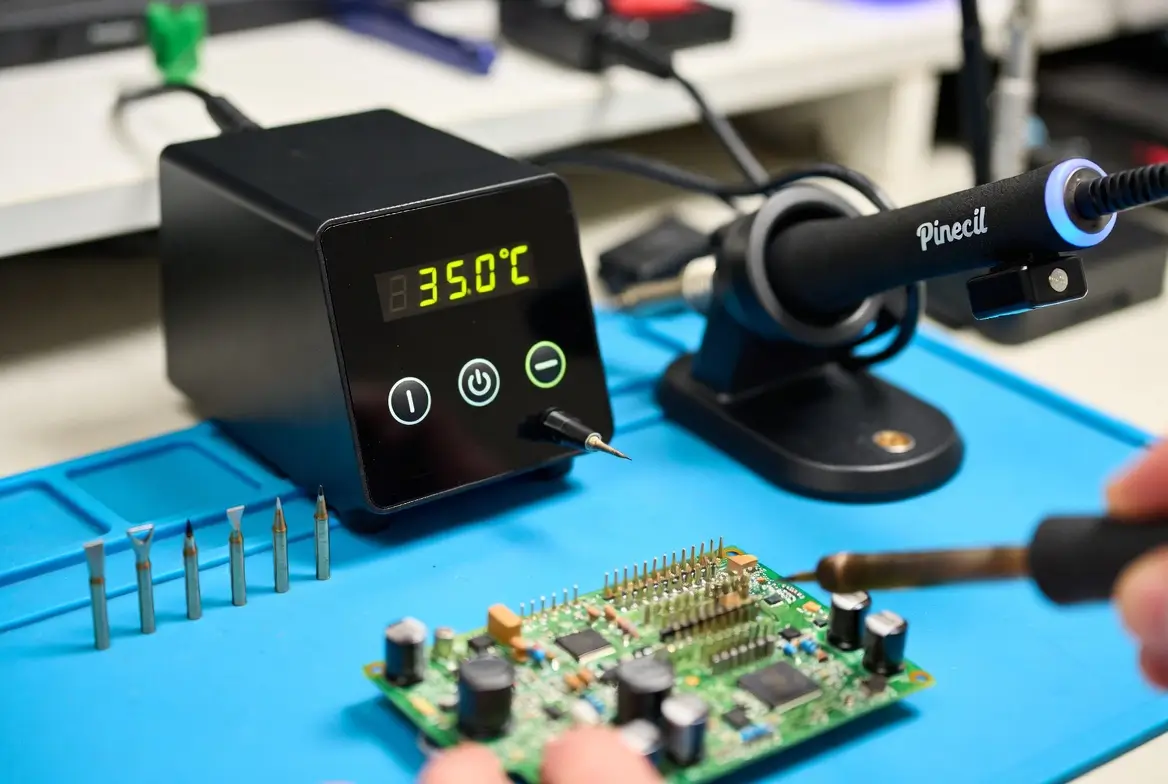
- Direct‑drive irons (e.g., Pinecil, Miniware TS80P, JBC clones): The heating element and temperature sensor are integrated in the tip itself, offering recovery times under 2 seconds. These are increasingly the best soldering station for electronics choice for serious hobbyists.
Fast recovery means you work faster and lift pads less often. Choose digital PID control or a direct‑drive iron for the best soldering station for electronics experience.
Anti‑Static Protection Features
Electrostatic discharge (ESD) can kill a microcontroller instantly without visible damage. The best soldering station for electronics must be ESD‑safe.
- Grounded tip: The iron tip is connected to earth ground via a 3‑prong plug. Check continuity with a multimeter.
- ESD‑safe station housing: The station itself should be made of static‑dissipative material and grounded.
- Anti‑static mats and wrist straps: Always use in conjunction with a grounding point.
Digital stations from Hakko, Weller, and Pace all include ESD protection. Budget analog stations often lack proper grounding. This alone is reason to invest in the best soldering station for electronics that meets industry ESD standards.
Standby Modes to Extend Life
Standby functions protect the tip and save energy. In the best soldering station for electronics, they’re more than a nice‑to‑have they’re a tip‑life multiplier.
- Standby (idle mode) : After a period of inactivity, the iron lowers the tip temperature to a safe “idle” level (typically 150–200°C). This prevents oxidation buildup while you prep components.
- Auto shut‑off: After a longer period, the station turns off completely. Peace of mind if you forget to kill the switch.
- Sleep on stand: Iron holders with a switch or vibration sensor (Pinecil, TS100) tell the station to go to sleep the moment the iron is placed in the rest.
Tips last many times longer when not sitting at 350°C idle. The best soldering station for electronics manages temperature not just for soldering, but for tip longevity.
Recommended Tips for Through‑hole vs. SMD
The best soldering station for electronics is only as good as the tip you put on it.
- Through‑hole (components with wire legs): A 1.6–2.4 mm chisel tip provides the mass to heat both the pad and the lead quickly. Too small a tip and you’ll dwell too long.
- SMD passives (0805, 0603 resistors): A fine conical or bent conical tip (0.5 mm) gives pinpoint control for one‑pad‑at‑a‑time soldering.
- SMD ICs (drag soldering) : A hoof tip or a large chisel tip (2–3 mm) with a slight indent holds a ball of solder and lets you drag across multiple pins in seconds.
- Hot‑air rework: Many stations include a hot‑air pencil for QFN and BGA parts separate from the soldering iron. Consider a combo unit if you plan both types of work.
Built‑up tips that mimic the direct‑drive cartridge style (Hakko T12, TS100 tips) transfer heat much faster. This is why the best soldering station for electronics reviews now favour cartridge‑tip systems over legacy passive tips.
Comparing analog simplicity to digital precision, the best soldering station for electronics in 2024 is a PID‑controlled station or a direct‑drive iron with interchangeable cartridge tips, ESD grounding, and a standby function. Your future PCBs will thank you.