Smart Home Automation No Wiring: Wireless Solutions for Renters & Homeowners
Smart home automation no wiring is no longer a futuristic dream it is the standard way people upgrade their living spaces today. Gone are the days when automating your home meant expensive custom installs, with electricians running cables through walls and control panels bolted in permanently. Today’s wireless protocols like Wi-Fi, Zigbee, and Z-Wave let you put sensors on windows, smart plugs in outlets, and voice assistants in every room, all without touching a screwdriver.
For renters who cannot make permanent changes, and for homeowners who want a fully reversible, flexible system, smart home automation no wiring is the perfect solution. It delivers all the convenience of a high-tech home without drilling a single hole. This guide walks through everything you need: the right wireless technology to choose, the best non-invasive products, how voice assistants tie it all together, and how to build custom routines that make your home feel truly intelligent.
Why Stick with Wi-Fi/Zigbee over Hardwired Systems?
If you are building a new house from scratch, hardwired systems like KNX or Control4 can make sense. But for everyone else, wireless is the clear winner and not just because it is easier. The real advantage of smart home automation no wiring is that it puts you in control without locking you into a permanent setup.
Cost
A hardwired smart home requires professional installation, a central controller, and often proprietary hardware. A basic wired setup can easily run into the thousands before you have even automated a single light. By contrast, smart home automation no wiring systems can start with a single $15 smart plug and grow from there.
Flexibility
Renters can take a wireless system apart in an afternoon and restore the property to its original state. Homeowners can move devices around as their needs change something impossible with wired solutions. This flexibility is at the heart of why smart home automation no wiring has become so popular.
Protocol choices for wireless automation
- Wi-Fi: No hub required, connects directly to your router. Simple, but can congest your network if you have dozens of devices.
- Zigbee & Z-Wave: Require a hub, but create a low-power mesh network that actually gets more reliable the more devices you add. Ideal for larger smart home automation no wiring setups.
- Matter/Thread: The new standard that lets devices from different brands talk to each other locally, gradually replacing the need to stick with one ecosystem.
Bottom line: Unless you need cinema-room level integration, wireless is the smart choice for 99% of people seeking smart home automation no wiring.
Top Products for Non-Invasive Automation
Building a wire-free smart home is all about devices that literally plug in or stick on. These are the categories that give you instant results without opening a wall, making smart home automation no wiring a reality for anyone.
1. Smart Plugs
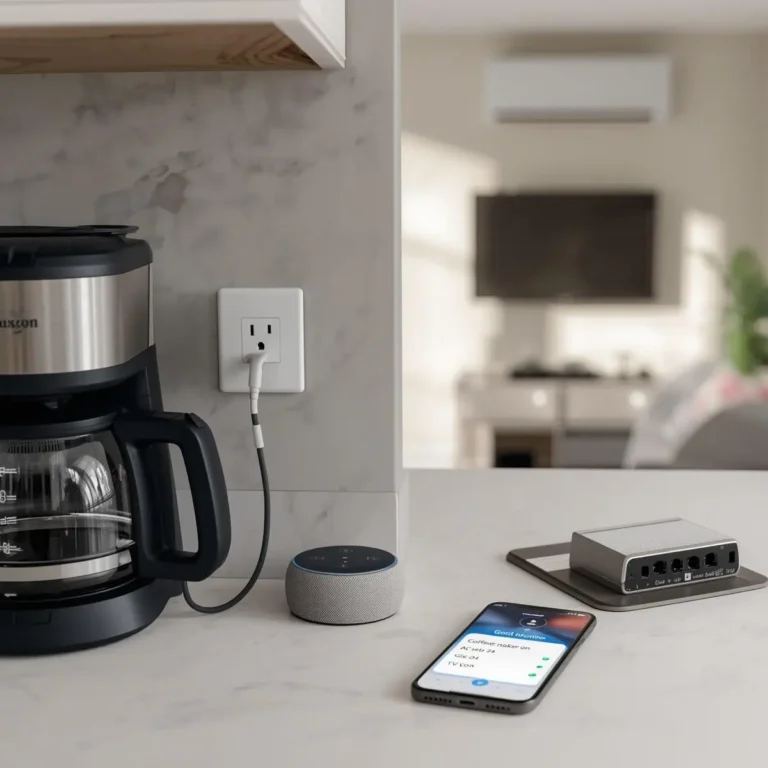
Turn any appliance into a smart device. Plug a lamp into a smart plug, and you can schedule it to turn on at sunset. Plug in a fan, and a temperature sensor can automatically switch it on when the room gets too warm. Good picks: TP-Link Kasa Wi-Fi plugs (reliable, no hub needed), or Aqara Zigbee plugs if building a larger mesh network.
2. Smart Power Strips
More powerful than a single plug, these let you control multiple outlets individually perfect for a desk or entertainment centre. Some even include USB ports that can be switched on and off remotely. Good picks: Gosund or Kasa smart power strips, which also monitor energy usage per outlet.
3. Motion & Contact Sensors
These stick on doors, windows, or walls with adhesive tape no drilling required for smart home automation no wiring. A contact sensor on your front door can trigger a hallway light. A motion sensor under a kitchen cabinet can turn on countertop LED strips when you walk in after dark. Good picks: Aqara, Eve, or Philips Hue sensors, depending on your chosen ecosystem.
4. Smart Bulbs & Light Strips
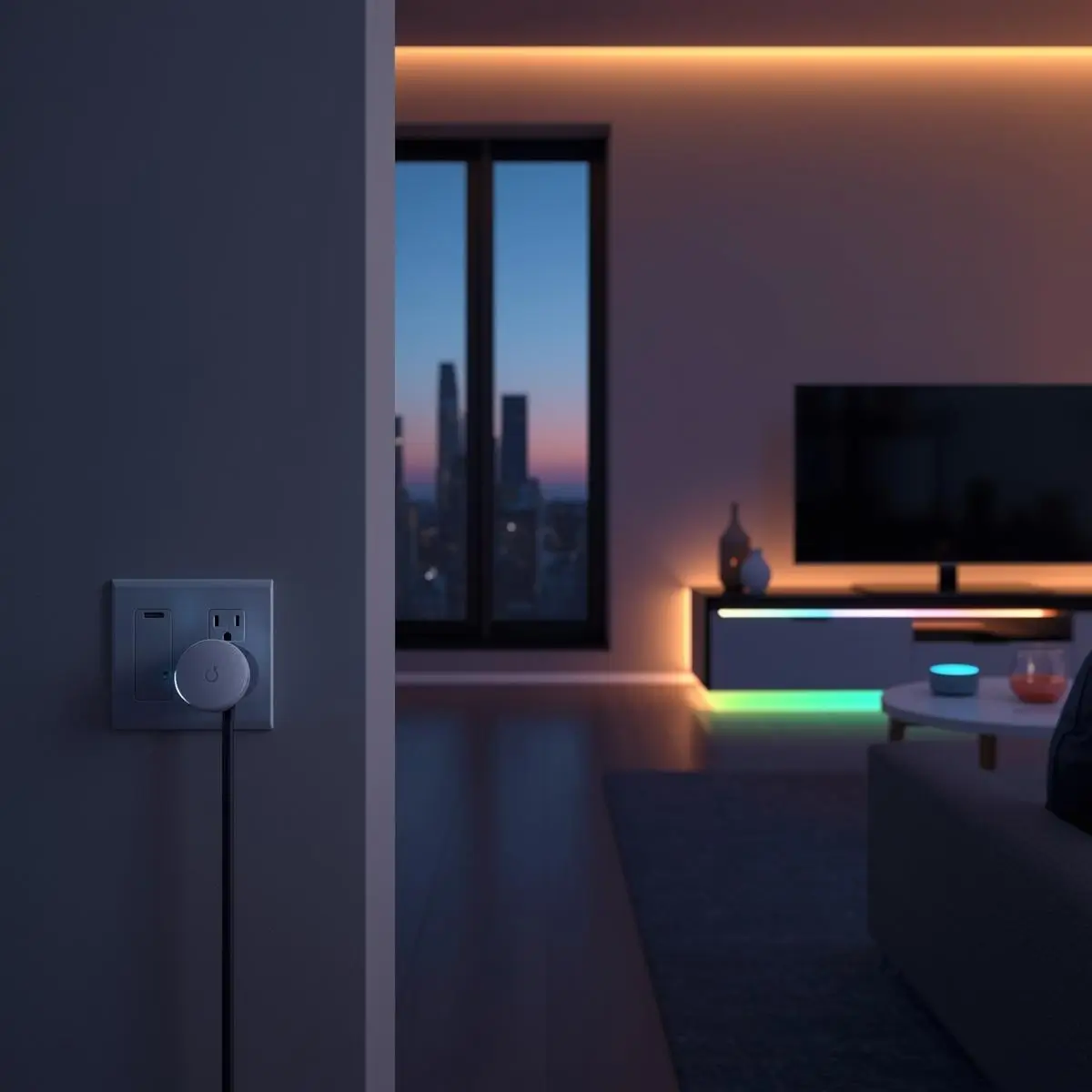
Simply swap existing bulbs for smart ones. Colour-changing LED strips with adhesive backing can be run under cabinets, behind TVs, or along baseboards, creating ambient lighting that transforms a room all without touching your electrical wiring. Good picks: Philips Hue for wide compatibility, or WiZ for a budget-friendly Wi-Fi option.
Integrating Voice Assistants (Alexa vs. Google Home)
Voice assistants are the glue that ties a smart home automation no wiring setup together. Both major platforms work without any in-wall cabling.
Amazon Alexa (Echo devices)
- Strength: The widest range of compatible devices (over 100,000).
- Routines: Build custom automations triggered by a single voice command.
- Best for: Homes with many different brands that need a unifying controller.
Google Home (Nest Speakers & Hubs)
- Strength: Natural language processing makes commands feel conversational.
- Google Assistant: Taps into your Google account, calendar, and questions.
- Best for: Families already using Google services and Android phones.
The practical choice: If you are starting fresh with smart home automation no wiring, many pick Alexa for its sheer compatibility. Google Home users love the smarter conversational feel. Either platform handles all the wireless devices mentioned above.
Creating Scenarios: “Goodnight” Mode Routine
Scenes and routines are where your smart home automation no wiring system truly shines. A routine triggers multiple actions from one voice command, schedule, or button press.
Building a “Goodnight” routine with Alexa
- Open the Alexa app, go to Routines, and tap the + icon.
- Set a voice trigger: “Alexa, goodnight.”
- Add actions:
- Turn off all smart lights
- Turn off the TV via a smart plug
- Set the thermostat to a comfortable sleeping temperature
- Lock all smart locks
- Activate hallway motion sensors for night-time navigation
- Optionally, add a spoken confirmation: “Sleep well. Security is on.”
The same routine in Google Home
Use the Routines section in the Home app with nearly identical steps.
Beyond bedtimes
Expand your smart home automation no wiring with additional scenes:
- “Movie Time”: Dims lights, lowers smart blinds, powers on the entertainment system.
- “Leaving Home”: Shuts everything down, adjusts the thermostat, and starts the robot vacuum. Can be triggered automatically when your phone’s location shows you have left.
None of these automations require a single new wire. Every device runs on batteries, plugs into an existing outlet, or sticks on with adhesive. That is the promise of smart home automation no wiring: it is completely portable, entirely reversible, and in many ways more powerful than the old hardwired systems of the past.