ESP32 Beginner Projects: Why ESP32 Over Arduino Uno? (WiFi/Bluetooth Built-in)
This collection of ESP32 beginner projects proves the ESP32 is the board you actually want. The Arduino Uno is a classic, but the ESP32 is cheaper than an Uno plus a Wi‑Fi shield, has dual‑mode Bluetooth and Wi‑Fi baked in, and runs at 240 MHz eighty times faster than an Uno’s humble 16 MHz. For under $5, you get a microcontroller that can host a web server, stream sensor data to your phone, and control relays from anywhere. Let’s dive into five ESP32 beginner projects that make the decision obvious.
Project 1: Weather Dashboard Display
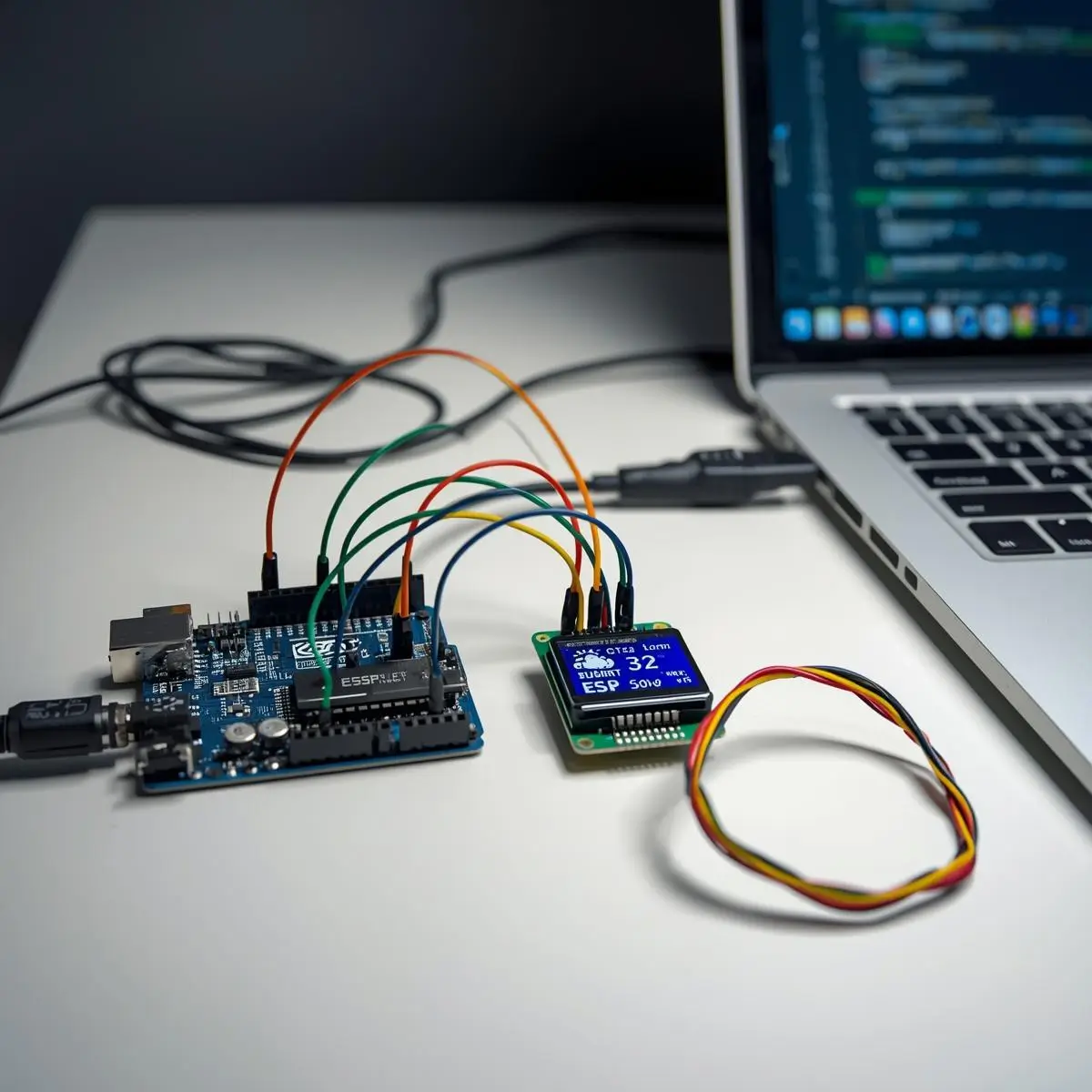
Turn a small OLED screen into a live weather station that pulls data from the internet no wires except a USB cable. This is one of the most satisfying ESP32 beginner projects because it looks impressive immediately.
Parts: ESP32 dev board, 0.96-inch SSD1306 OLED display (I2C), breadboard, jumper wires.
The build: Connect the OLED to the ESP32’s I2C pins (SDA→GPIO21, SCL→GPIO22, VCC→3.3V, GND→GND). In Arduino IDE, install the “Adafruit SSD1306” and “ArduinoJson” libraries. Use the OpenWeatherMap API (free tier) to fetch temperature, humidity, and conditions. The display cycles through the data in a clean layout.
What you learn: Wi‑Fi client mode, JSON parsing, and I2C display driving. Perfect for anyone starting ESP32 beginner projects.
Project 2: Remote Power Monitor
Know exactly how much energy your appliances use, in real time.
Parts: ESP32, PZEM‑004T energy monitoring module (or SCT‑013 current clamp with an ADC), jumper wires.
The build: Connect the PZEM‑004T module’s serial pins to the ESP32 (RX→GPIO16, TX→GPIO17). Power the module from the same voltage you’re measuring. Load a sketch that reads voltage, current, power, and cumulative energy. The ESP32 hosts a simple web page on your home network displaying live figures.
What you learn: Serial communication, handling floating‑point sensor data, and hosting a local web server skills you’ll reuse in many advanced ESP32 beginner projects.
Where to Buy Development Boards Cheaply
You don’t need expensive official boards to complete these ESP32 beginner projects. Reliable budget sources:
- AliExpress / Banggood: ESP32‑DevKitC clones for 3–5 each. Buy a 3‑pack.
- Amazon: Faster shipping; brands like DOIT, ESPRESSIF official, or HiLetgo.
- Local electronics stores: Often stock the Wemos D1 Mini ESP32 or TTGO T‑Display (which includes a built‑in screen).
A 4board,a2 OLED, and a $3 sensor kit fund all five ESP32 beginner projects for less than the cost of a pizza.
These ESP32 beginner projects get you from zero to a useful smart device in a single afternoon. No soldering required, just jumper wires and enthusiasm. Pick one, flash the code, and watch your creation come to life.