Workshop Safety Equipment List: OSHA Regulations for Home Shops
While OSHA doesn’t send inspectors to garages, its standards form the backbone of any sane workshop safety equipment list. The emphasis is on eliminating exposure to respiratory, eye, hearing, and crush hazards. This workshop safety equipment list translates industrial rules into actionable DIY picks: the right respirator for dust and fumes, safety glasses that actually take a hit, and hearing protection comfortable enough to wear all day.
N95 vs. P100 Respirators Explained
Respiratory protection is the most critical item on your workshop safety equipment list.
- N95: Filters 95% of airborne particles but offers no protection against oil‑based aerosols (paints, solvents). Perfect for sanding wood, drywall dust, and general shop use. Replace when breathing becomes difficult.
- P100 (HEPA): Filters 99.97% of particles, including oil mists. This is mandatory for grinding metal that might contain chromium, sanding old lead paint, or working with epoxy and paints that release organic vapours (with the appropriate cartridge).
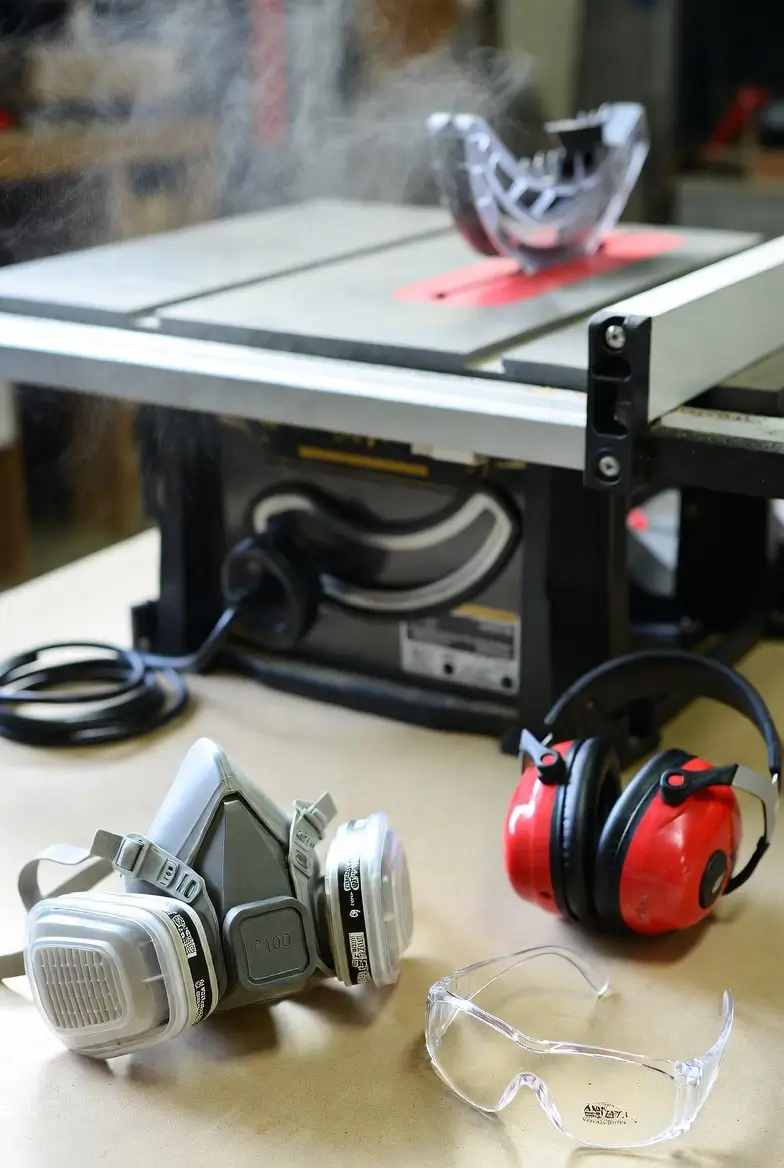
- Reusable half‑face respirator (e.g., 3M 6200 with P100 cartridges): The top choice for any serious workshop safety equipment list. Fits under face shields and costs under $30.
Never confuse a paper mask with a proper respirator. Your workshop safety equipment list must include a real, valve‑equipped respirator with replaceable filters.
Impact Rated Safety Glasses Standards
Clear vision is a non‑negotiable on every workshop safety equipment list. The standard to look for is ANSI Z87.1+ (the “+” sign indicates high‑velocity impact rating).
- Polycarbonate lenses: Lightweight and resistant to shattering from flying nails, wood chips, and grinding sparks.
- Side shields: Integral side protection is required. Wrap‑around glasses are the most comfortable and stay put.
- Anti‑fog coating: Cheap glasses fog up the moment you start sweating. A quality anti‑fog coating is worth every extra dollar.
One pair of Z87.1+ safety glasses costs under $15 and lasts years. It’s the cheapest line on any workshop safety equipment list, yet the most immediately impactful.
Hearing Protection for Loud Machinery
Most hobby woodworking machines exceed 85 dBA the threshold where hearing damage begins after prolonged exposure. A responsible workshop safety equipment list includes hearing protection rated by Noise Reduction Rating (NRR).
- Earmuffs (NRR 25–31): Easy to put on and take off. Essential for routing, planing, and running a dust collector. All muffs on your workshop safety equipment list should have a NRR of at least 25.
- Earplugs (NRR 29–33): Higher protection, less bulky, but must be inserted correctly. Foam plugs, rolled tightly and inserted deeply, offer the best isolation.
- Electronic earmuffs: These amplify ambient sounds (conversation, safety warnings) while clamping down on high‑decibel noise. Expensive but the ultimate addition to a workshop safety equipment list.
Even a single afternoon on a loud planer without muffs can cause permanent ringing. Make hearing protection a permanent part of your workshop safety equipment list.
Your workshop safety equipment list doesn’t need to be long: a P100 respirator, Z87.1+ glasses, and 25+ NRR earmuffs cover nearly every hazard a home workshop throws at you. Use them every time.