Smart Garden Watering System ESP32: Water When Needed, Not on a Timer
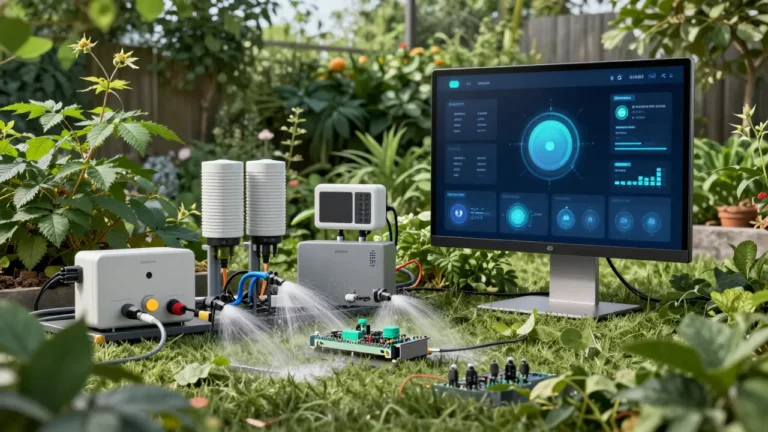
A smart garden watering system esp32 checks the actual soil moisture before turning on the sprinklers and skips a scheduled watering if rain is forecast. It’s a world apart from the dumb timers that water your garden during a thunderstorm. This build uses low‑cost capacitive soil moisture sensors, an ESP32 as the controller, and Home Assistant for the intelligence. By the end of this guide, you’ll have a fully automated smart garden watering system esp32 that saves water, time, and your plants.
Capacitive Soil Moisture Sensors: Why They Matter
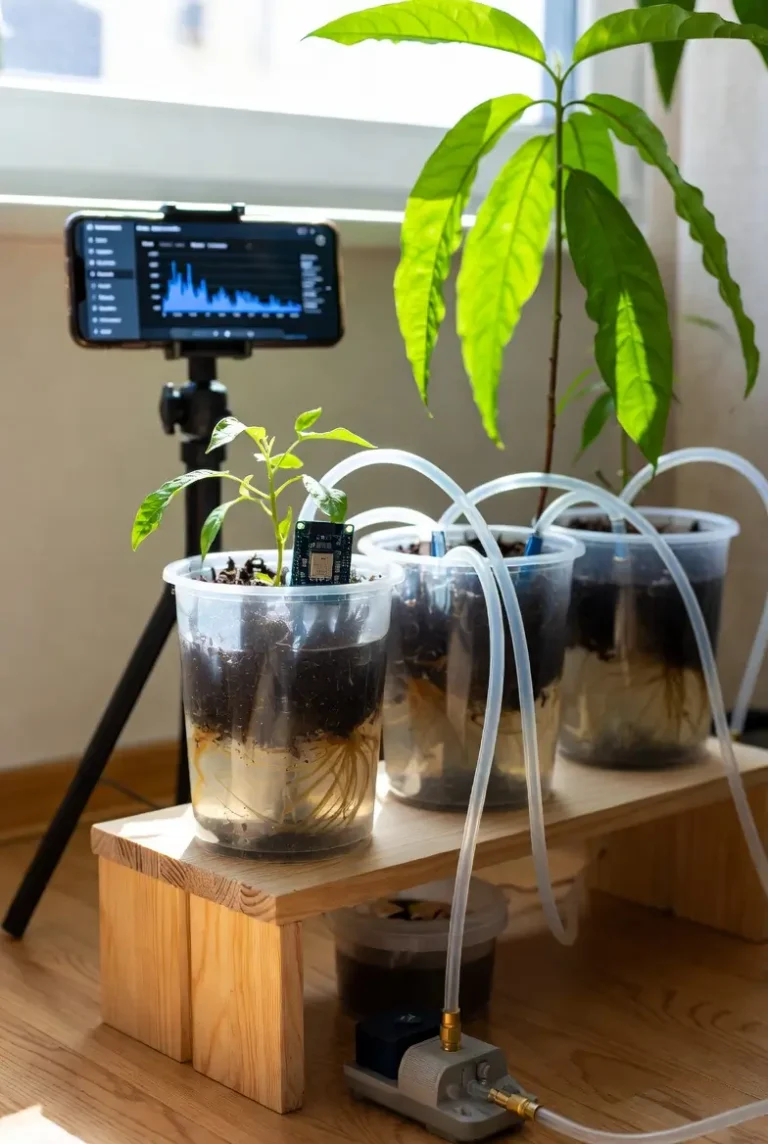
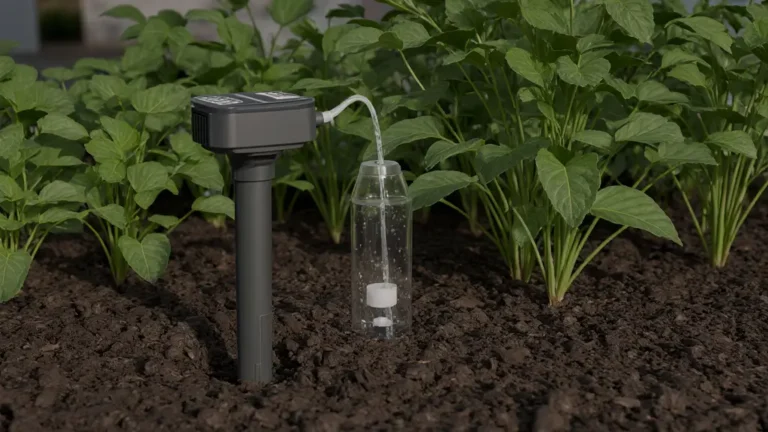
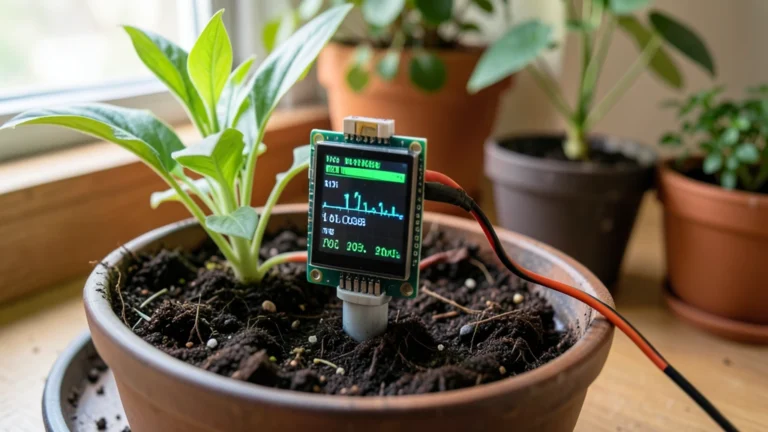
The biggest mistake in any smart garden watering system esp32 project is using resistive moisture sensors. Those cheap two‑prong probes rust and corrode within weeks, delivering erratic readings. Capacitive sensors, on the other hand, are sealed in epoxy they measure the soil’s dielectric constant without exposing metal to moisture. They output an analog voltage that drops as the soil dries out. A typical dry‑air reading is around 2.5V, while fully saturated soil might read 1.0V. Connect the sensor to any analog pin on the ESP32 (e.g., GPIO34). In ESPHome, define a sensor with the adc platform and calibrate it to percentage moisture. For long‑term reliability, power the sensor only when taking a reading use a transistor switched by a digital pin to avoid electrolysis even with capacitive types. This one step will make your smart garden watering system esp32 maintenance‑free for years.
Solenoid Valve and Relay Control
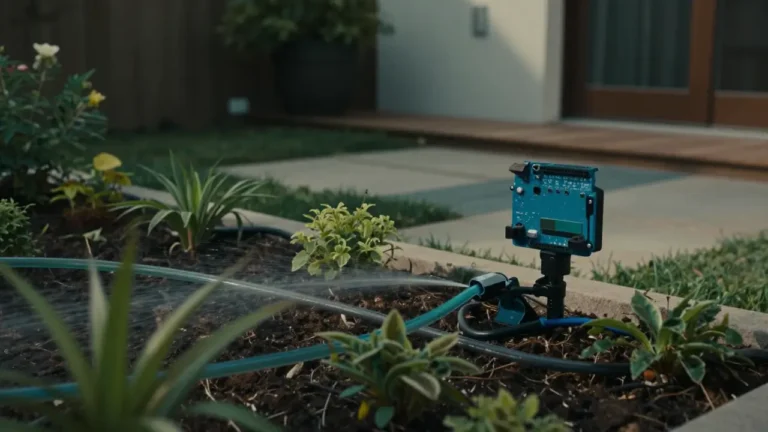
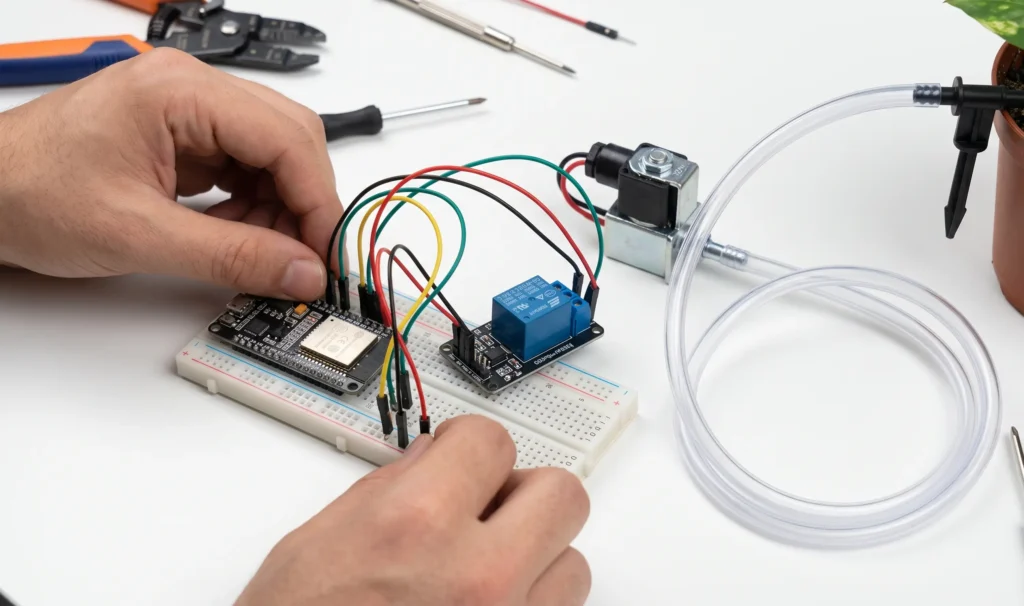
A smart garden watering system esp32 physically controls water flow using a 12V solenoid valve. For a small drip‑irrigation bed, a 1/4‑inch or 1/2‑inch plastic solenoid valve (5‑10) is perfect. Wire it through a relay module (e.g., a single‑channel 5V relay board controlled by a GPIO pin on the ESP32). The relay’s normally‑open contacts connect the valve to a 12V DC power supply. When the ESP32 triggers the relay, the valve opens, water flows. Place the valve between your water source (tap or elevated tank) and the drip line. Always include a one‑way check valve on the garden side to prevent siphoning.
Smart Scheduling with Home Assistant
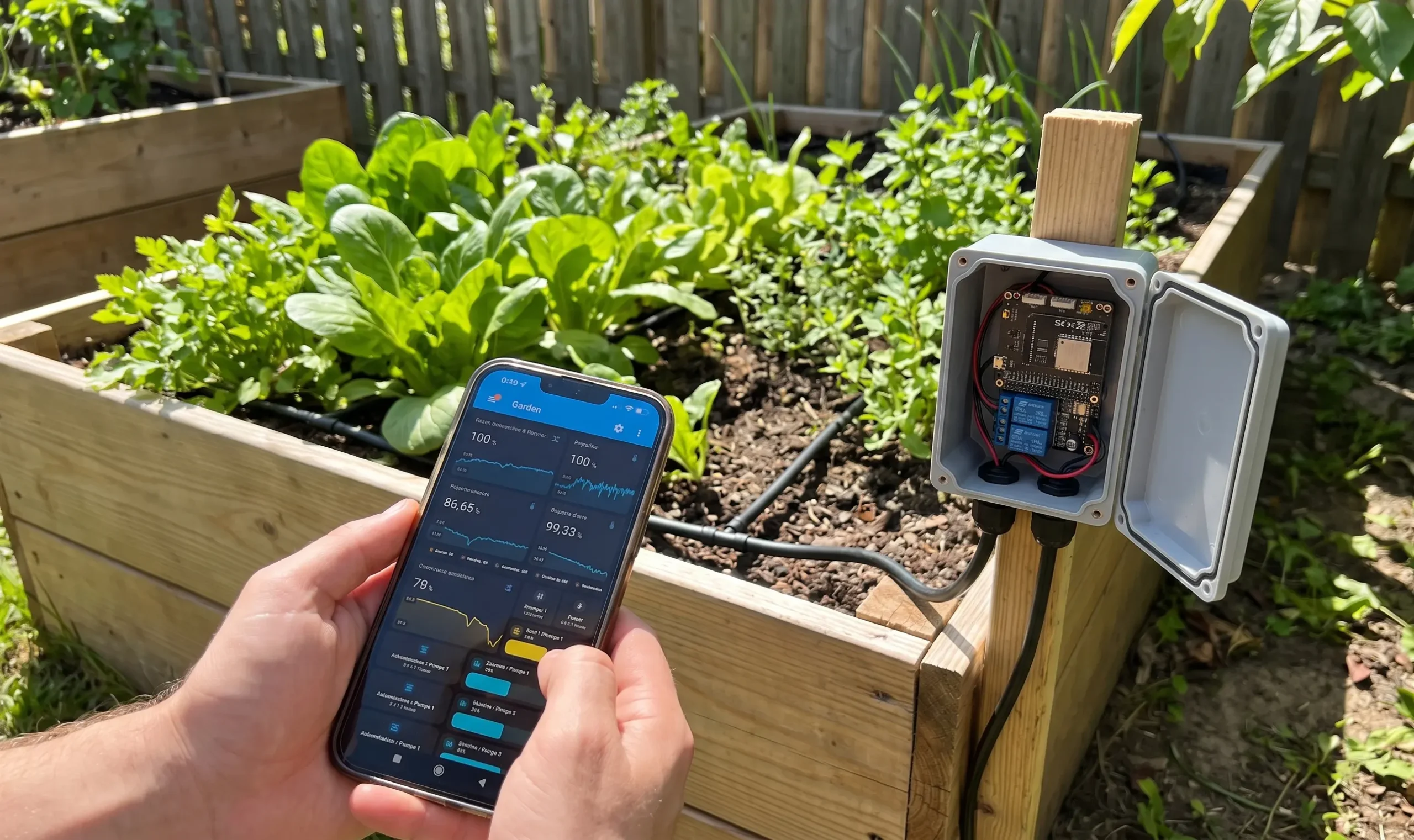
Now the intelligence of your smart garden watering system esp32 comes alive. In Home Assistant, create an automation:
- Trigger: Every morning at 6:00 AM.
- Condition 1: Soil moisture sensor reports below a threshold (e.g., <30%).
- Condition 2: The weather forecast from OpenWeatherMap shows no rain in the next 12 hours.
- Action: Activate the relay for 15 minutes, then turn it off.
You can also override manually from the dashboard, or add a vacation toggle that waters more conservatively. The Home Assistant integration via MQTT (or ESPHome’s native API) makes this a truly responsive smart garden watering system esp32. You’ll never water a rain‑soaked bed again.